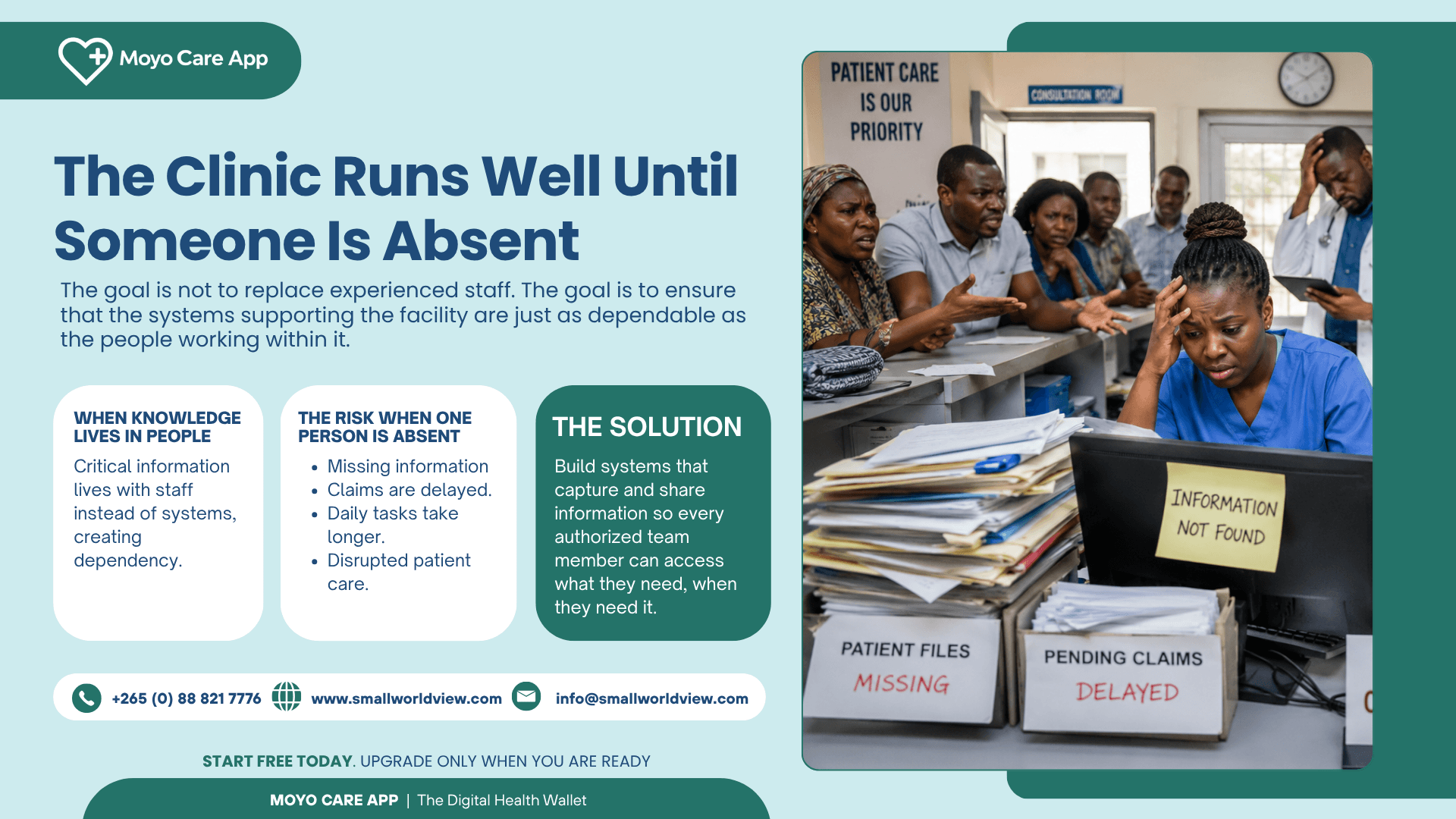
Experienced healthcare professionals are the foundation of every successful health facility. Their expertise deserves to be supported by reliable systems that preserve knowledge, strengthen teamwork, and keep services running smoothly every day.
The Value of Experienced Healthcare Teams
Every healthcare facility has people whose experience makes a significant difference to its daily operations.
It may be the receptionist who understands how patient records are organized, the accounts clerk who knows the progress of every insurance claim, the nurse who closely follows pharmacy stock levels, or the clinician who has built strong knowledge of returning patients and their care histories.
Over time, these team members become trusted sources of guidance. Their experience helps colleagues solve problems, maintain continuity, and deliver services confidently.
This knowledge is a valuable institutional asset. As a facility grows, the opportunity is to capture and organize it so that the entire team can benefit from it.
Helping the Facility Run Smoothly Every Day
The strength of a well-managed healthcare facility can be seen in its ability to continue operating confidently when team members are attending training, taking annual leave, supporting another department, or handling other responsibilities.
When information is clearly recorded and made available to authorized staff, routine activities can continue without unnecessary interruptions.
Staff can quickly review patient histories, check the progress of insurance claims, confirm stock levels, complete billing activities, and make informed decisions using information that is already available within the facility.
This does not reduce the importance of experienced employees. It strengthens their contribution by ensuring that the knowledge they have developed continues to support colleagues and patients throughout the organization.
As the facility becomes busier, shared systems provide a strong foundation for maintaining service quality, improving coordination, and supporting continued growth.
From Individual Knowledge to Organisational Knowledge
A mature healthcare facility combines professional experience with clear, dependable processes.
Patient information should be available to authorized team members whenever it is needed. Billing should follow consistent workflows. Insurance claims should be easy to trace. Inventory records should provide a clear and current view of available medicines and supplies.
When this information is captured consistently, it becomes part of the facility's shared organisational knowledge.
Experienced staff can spend less time responding to repeated operational questions and more time applying their expertise where it creates the greatest value. New employees can also understand processes more quickly, while handovers become clearer and more effective.
The strongest healthcare facilities combine skilled people with dependable systems. Together, they create an environment where knowledge is shared, responsibilities are clear, and patients receive consistent care.
Supporting Teams with Digital Systems
Digital health platforms help facilities organize information, standardize routine processes, and make operational knowledge available to the people who need it.
Rather than replacing professional judgment, digital systems support it. They give healthcare workers access to complete and timely information, helping them coordinate services, make informed decisions, and maintain continuity across departments.
They also make it easier for management teams to understand how the facility is performing. Information on patient activity, revenue, insurance claims, medicines, supplies, and service delivery can be reviewed without depending on manually compiled updates from individual employees.
The result is a more connected working environment in which people, processes, and information support one another.
How Moyo Care Supports Healthcare Facilities
Moyo Care App is a ready-to-deploy hospital management system and electronic medical record platform designed to support standardized workflows across the facility.
The platform supports patient registration, consultation, laboratory services, pharmacy, billing, inventory management, and health insurance claims within one connected system.
By bringing these functions together, Moyo Care helps facilities preserve institutional knowledge, improve collaboration between departments, and make important information available to authorized staff when it is needed.
Because Moyo Care is cloud-based, it can be accessed through internet-connected computers or mobile devices without requiring facilities to purchase dedicated servers or establish complex IT infrastructure.
The platform can be configured to reflect the facility's workflows, helping teams adopt a consistent way of working while preserving the experience and professional judgment that already exist within the organization.
Integration with participating health insurance systems can also help facilities reduce paper-based processes, improve claim traceability, and support more efficient revenue management.
Building a Stronger Foundation for Growth
Great healthcare depends on committed and experienced people. Reliable systems help those people work more effectively, collaborate more easily, and extend the value of their knowledge across the entire facility.
By investing in shared processes and dependable digital platforms, healthcare facilities can strengthen continuity, support their teams, and create a solid foundation for future growth.
The goal is simple: to give healthcare professionals systems they can trust so that they can continue focusing on what matters most—delivering quality care to every patient.
Next Article
In the next article, we explore how better information management can help healthcare facilities strengthen their financial performance:
Reducing Revenue Loss Through Better Information Management